Cérémonie 13 Octobre 2025
Le Prix du Livre Allemand 2025 est décerné à
Lorsqu’elle reçoit un appel au volant de sa voiture, la narratrice, une autrice jamais nommée, met les warnings et se gare sur le bas côté. À l’autre bout du fil, un célèbre metteur en scène de théâtre essaie de la convaincre de participer à son nouveau projet – une pièce située dans les tropiques, la reconstitution d’une affaire tragique. Quelques semaines plus tard, elle part rejoindre la troupe de théâtre dans la jungle. Dorothee Elmiger nous raconte une histoire inquiétante, peuplée d’humains et de monstres, de peur et de violence, une histoire sur le fait d’être perdu dans l’univers, une histoire sur l’échec du récit.
Ce roman est un événement. Une autrice fait le récit de son voyage dans la jungle d’Amérique centrale avec une troupe de théâtre, sur les traces de deux jeunes Néerlandaises qui y ont disparu quelques années auparavant. En chemin, le groupe se raconte des histoires troublantes. Plus il s’enfonce dans ce décor de broussailles et de marécages, plus Dorothée Elmiger plonge les lecteurices dans une atmosphère d’angoisse. Son roman met en scène des gens qui succombent à leur « part la plus sombre ». Dans ce récit presque entièrement écrit au discours indirect, la langue de Dorothee Elmiger et la référence à notre présent perdent de plus en plus l’équilibre, ce qui rend le style du roman à la fois distant et captivant. Die Holländerinnen est un fascinant voyage au cœur des ténèbres.
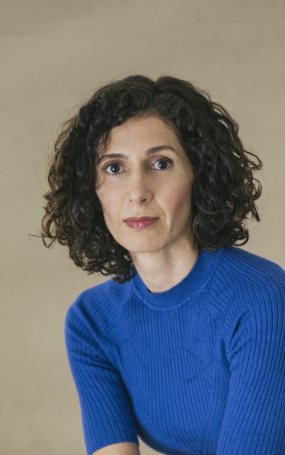
Dorothee Elmiger
Les romans sélectionnés pour le Prix du Livre Allemand 2025
Lorsqu’elle reçoit un appel au volant de sa voiture, la narratrice, une autrice jamais nommée, met les warnings et se gare sur le bas côté. À l’autre bout du fil, un célèbre metteur en scène de théâtre essaie de la convaincre de participer à son nouveau projet – une pièce située dans les tropiques, la reconstitution d’une affaire tragique. Quelques semaines plus tard, elle part rejoindre la troupe de théâtre dans la jungle. Dorothee Elmiger nous raconte une histoire inquiétante, peuplée d’humains et de monstres, de peur et de violence, une histoire sur le fait d’être perdu dans l’univers, une histoire sur l’échec du récit.
© Georg Gatsas
Dorothee Elmiger
Le dernier jour des épreuves du baccalauréat 2002, une fusillade a lieu dans le collège-lycée Gutenberg d’Erfurt. Notre narrateur, onze ans au moment des faits, est évacué avec ses camarades, et témoin, les semaines suivantes, de l’impuissance des adultes face à la tragédie. Plus de vingt ans après, l’événement refait irruption dans sa vie, déclenchant un intérêt obsessionnel pour le sujet, dont il entreprend de faire un roman. Mais pourquoi rouvrir de telles blessures après tant d’années ? De quel droit ? Et qu’en est-il des souvenirs, des histoires qu’il a racontées si souvent qu’elles sont devenues vraies ?
© Jakob_Kielgass
Kaleb Erdmann
Ce titre inhabituel, « ë », renvoie à une lettre qui a une fonction importante dans la langue albanaise, même, si la plupart du temps. elle ne se prononce pas. Enfant de réfugiés du Kosovo, la narratrice est à la recherche d’une langue et d’une voix. Elle grandit en Allemagne, va au jardin d’enfants, à l’école puis à l’université, mais reste incomprise, toujours renvoyée aux mêmes clichés, et en proie à l’ignorance et à l’indifférence.
Lorsque la Guerre du Kosovo éclate, à la fin des années 1990, elle la vit à distance. Mais si elles y sont vécues différemment, la guerre et la mort sont présentes dans la diaspora aussi.
« ë » revient donc sur la Guerre du Kosovo, méconnue en Allemagne, et rappelle la souffrance des familles qui ont perdu leur pays, dont les proches assassinés ont fini dans des fosses communes, sans jamais être retrouvés ni identifiés. Un passé qu’on ne peut pas laisser derrière soi, qui imprègne chaque fibre du corps, magnifiquement mis en langue par Jehona Kicaj.
© Carl Philipp Roth
Jehona Kicaj
Dans quelle mesure peut-on être autonome lorsque sa vie est régie par une maladie mentale ? De quoi rêve quelqu’un qui n’a plus rien à perdre ? Et à quoi pourrait ressembler son dernier moment de bonheur ? Bienvenue dans la « Maison du Soleil », institution qui s’avère être à la fois machine à exaucer les vœux et à supprimer les gens. Les personnes suicidaires ou en phase terminale se font admettre dans cette clinique financée par l’État pour exercer le moindre de leur vœu avant de mettre – discrètement – fin à leurs jours. Mais une personne qui ne veut plus vivre veut-elle vraiment mourir ?
© Regina Schmeken
Thomas Melle
Le monde brûle, dans les forêts comme sur les écrans. Era, quinze ans, qui vit avec sa mère en lisière de la forêt, tente de résister au processus inexorable de destruction en documentant l’extinction des oiseaux. Elle regarde aussi les vidéos de sa camarade Maja et de la sœur de celle-ci, Merle, qui, dans la clairière voisine, font exploser des disques durs. Maja, fille de deux momfluenceuses, veut effacer les traces d’une enfance exposée au public. Sa résistance à elle s’exprime dans la destruction, tandis qu’Era tient des carnets, dessine, essaie de classer le savoir auquel elle a accès. Mais toutes deux sont liées par une même quête d’intimité et d’émotions dans le monde réel. Tandis que les tourterelles disparaissent, les deux adolescentes tombent amoureuses. Mais les oiseaux ne sont pas les seuls à être menacés : lorsqu’un vaste incendie détruit la forêt, Era et Maja perdent une partie non négligeable de leur espace de vie.
© Apollonia Theresa Bitzan
Fiona Sironic
Le décor : la France du 18e siècle, tantôt pré-révolutionnaire, tantôt révolutionnaire. Deux femmes s’aiment qui ne pourraient être plus différentes : Marie Biheron qui, toute jeune fille déjà, dissèque des cadavres pour en modeler les entrailles en cire, et Madeleine Basseporte, dont les dessins font apparaître l’anatomie des fleurs sur le papier car, au dehors, les gens sont plutôt ennuyeux et, souvent, ne savent rien. Les hommes occupent de jolis seconds rôles – un auteur à succès nerveux, un jeune bon à rien et Diderot, qui boit du café et parle beaucoup. « Wachs » est un roman d’amour qui oscille entre un temps où les anémones poussaient tranquillement au bord des chemins, et ces journées de terreur où la tête de la reine sera coupée telle une belle fleur.
© Monika Höfler
Christine Wunnicke
Les romans sélectionnés pour le Prix du Livre Allemand 2025
Provincial West Germany in the nineties: boxy new builds on one side of the village, traditional farmhouses on the other. A sports ground, a pub, a bakery, a bus stop. And: an insurance office. The first-person narrator in Kathrin Bach’s prose debut is born into a long line of salespeople. Her parents go on selling what their fathers brought to the local upwardly mobile villages after the war: insurance. As the business continues, it brings modest prosperity – but also everpresent fear. The next disaster is only ever a phone call away.
Life Insurance melds memories, images and lists into a tragicomic family story. Kathrin Bach depicts a very German yearning for security – and the experience that we can’t buy ourselves out of risk and danger. A world in which time is money, and freedom is a two-week holiday every year. And a protagonist who faces her fears to assure her own life through writing.
© Julia Vogel
edition AZUR
Belgrade 1942: On the day that occupied Serbia is declared “free of Jews”, Isak Ras ventures through the city one last time to clear up the unsolved mystery of his past. What happened to his mother who disappeared without a trace 21 years ago? Were the anarchists Rosa and Milan involved? Or the mysterious doppelgangers roaming the city? In eight chapters told from eight different perspectives in this epic novel, the solution to Isak’s complex mystery is gradually revealed.
© Apollonia Theresa Bitzan
Marko Dinić
The fog lingers over the fields and the canal. In the small town of Lasseren near the Dutch border, it is as if winter were refusing to end. Nothing much happens here, in the flatlands. Anyone looking for work inevitably ends up at Möllring, the gigantic poultry slaughterhouse on the edge of town. Here, a handful of people has woken up this Monday morning with great expectations: single mum Sonia hopes to get a job far away from the conveyor belt and portioning machine; for young engineer Anna, more or less everything depends on today’s trial run of the latest automation solution; meanwhile, Merkhausen – a process optimisation manager with a weakness for Polish women whose wife has left him – is looking forward to a first date tonight; Nassim, a visually impaired refugee from Afghanistan, has got himself entangled with Justyna, who is twenty years older than him, and is convinced his poems will soften the hearts of German bureaucrats; and German-Iranian author Roshi has travelled all the way from Cologne to translate the poems for him.
When a careless cyclist breaks Nassim’s cane right in the middle of town, and the story is picked up by the local radio station, Nassim becomes a local legend – but more than that too: he inspires people to look their truth squarely in the eye.
© Clara Wildberger
Nava Ebrahimi
The narrator, a renowned writer, is contacted by a famous theatre producer who is keen to involve her in his latest project - a play set in the tropics, the reconstruction of a case as he puts it, a kind of tropical passion with references to Herzog and Coppola. She is to record her personal impressions in detail, documenting the research and creation of the play which revolves around two women who went missing in a Central American forest. A digital camera found at the scene highlighted a mystery, containing 91 consecutive photos, without any indication of what the women had been trying to capture.
A few weeks later, the writer sets off to join the theater group on their journey deep into the jungle. She sense a kind of danger, a discomfort that washes over her in waves, though she is unable to tell whether this comes from the landscape and climate or from the director’s plans. The disorientated feeling she gets from being displaced, the deserted roads, abandoned plantations, the silences are all the things that the director has asked her to record and transcribe. The deeper she goes, the more she loses: language, concepts, her own self, her sense of the world.
Dorothee Elmiger tells a disturbing story of humans and monsters, of fear and violence, of being lost in the universe and of the failure of narratives.
© Georg Gatsas
Dorothee Elmiger
On the last day of the final school exams in 2002, shots ring out at the Gutenberg High School in Erfurt. The narrator also a writer, then eleven years old, is evacuated with his classmates and, in the weeks that follow, witnesses the helplessness of adults confronted with this crime. More than twenty years later, the event resurfaces unexpectedly in his life, sparking an obsessive engagement with the subject that is meant to culminate in a novel. Yet re-opening old wounds after so many years is fraught with difficulty. He grapples with whether he has the right to do so and reflects on the nature of his memories—some stories he has told so often, they have become indistinguishable from truth.
© Jakob_Kielgass
Kaleb Erdmann
Hanna Krause was a florist before life made her a crane operator. She lived through two revolutions, two dictatorships, an uprising, two world wars ending in two defeats, two democracies, and the leadership of the Kaiser and many others; she experienced good times and bad times;
she gave birth to six children and was unable to bury two of them, which pained her until the end of her life. Later, long after she had bid goodbye to her florist’s shop, she worked as a crane operator in the hall of a state-owned heavy machinery plant in Magdeburg where she had an excellent view of the relationships of the people ten metres below her. She died before she got to the point where she no longer understood the world. Right up until her death Hanna Krause was a woman who took life as it came. Her only credo: stay decent.
© Susanne Schleyer, Autorenarchiv
Annett Gröschner
A family from Kyiv sells Russian specialities in Leipzig – vodka, pelmeni, SIM cards, sailor shirts – and also a sense of Eastern European belonging. However, since the Russian invasion of Ukraine, the last item is in short supply. The family’s mother supports Putin. And her son, who loves the Russian language above all, his mother more than anyone, and Kyiv more than any city in the world, is at his wit’s end. For him to return to Ukraine in the middle of the war is unwise. But how else can he save his mother from fascism and the absurd lies told on Russian television?
© Paula Winkler
Dmitrij Kapitelman
When Jina Mahsa Amini is murdered by the morality police in Tehran in 2022 and the world’s first ever women-led revolution breaks out in Iran, the narrator of In the Heart of the Cat, also called Jina, is confronted by images that take her back to some of her deepest memories of Iran, a place that could have been her homeland had the 1979 Islamic Revolution not robbed her of fundamental human rights and made her into a nomad. The tumultuous events sparked by the death of Jina Mahsa Amini and the courageous actions of the women and girls of Iran, who risk life and limb to resist the regime responsible for Amini’s murderer, leads Jina to delve into her own family history, which is deeply intertwined with the political vicissitudes of life in Iran.
© Heike Steinweg / Suhrkamp Verlag
Jina Khayyer
The unusual title “ë” stands for a letter that has an important function in the Albanian language, although it usually goes unpronounced. As the child of refugees from Kosovo, the narrator is searching for a language and a voice. She grows up in Germany, goes to kindergarten, school and university, looking for understanding, but encountering attributions, incomprehension and ignorance. When the Kosovo War took place by the end of the 1990s, she experienced it from a safe distance. But war and death are also present in the diaspora – they are just experienced differently.
The novel “ë” tells about the Kosovo war and recalls the suffering of families who lost their homeland, whose murdered relatives were buried anonymously and are still missing or unidentified as of today. Jehona Kicaj brings a past to life that cannot fade because it is permanently embedded in every fibre of the body.
© Carl Philipp Roth
Jehona Kicaj
At the beginning of the 1970s, Johann arrives in a city to study, his head filled with chaotic dreams. He meets a couple, Christiane and Tommi, who take him into their fold. Together they explore the light and dark sides of love, through a love triangle that gradually tightens. As a child when asked by his father what he wished for in life, Johann didn’t dare answer
truthfully. "I want to see what it’s like to kill someone."
© Peter-Andreas Hassiepen
Michael Köhlmeier
An Algerian soldier is trapped in the first German poison gas attack, decides that one side has to end the conflict, and leaves the battlefield. In a futuristic Cairo, a stand-up comedian sees an android laughing at her jokes. A weaver from Bohemia is replaced by an automated loom, steals a hammer and attacks the machine. What do people dream of in the era of capitalism? And do the machines we have created, which are increasingly rising against us, dream too? In the unique hall of mirrors created in this novel, these conflicts are ongoing and the stories are open-ended.
© Peter-Andreas Hassiepen
Jonas Lüscher
How much self-determination is possible when mental illness controls your life? What does someone who feels they have nothing left to lose truly long for? And what might ultimate happiness look like? Welcome to the “Haus zur Sonne,” an institution that is both a wish-fulfilment machine and an abolition apparatus. Here, people who are tired of life or terminally ill voluntarily enter this state-funded clinic to have every conceivable wish granted – before quietly departing from life. But do those who no longer want to live really want to die? Plumbing the depths of our longings and death drives, Thomas Melle offers a radical sketch of the human condition.
© Regina Schmeken
Thomas Melle
Two Brits, two Germans, four single parents, and one major culture clash: Kayla, Tamara, Anja, and Nanna are friends who criticize and support each other with equal fervor. In sharply humorous episodes, we follow these women and their children through their everyday lives, from a kids’ birthday party with cocaine in the family bathroom to a parents’ evening with a crush on the new teacher.
© Lee Everett Thieler
Jacinta Nandi
Parker and Kasimir immigrated from Poland to the USA when they were young, brought by their mother so that they could have a better life. After this single act of resolve, their mother loses all interest in life, and the brothers develop a powerful symbiotic bond, isolated from those around them. They survive in this foreign country but never feel at home there. Parker works nights as a private chauffeur, while Kasimir never leaves the house. When footloose Luzia moves in with them, she brings a new breath of life, but in doing so she destroys the brothers’ almost wordless bond. When the young woman leaves abruptly for Panama, one thing is clear: Kasimir is going to follow her, even to the ends of the world.
© Alena Schmick
Gesa Olkusz
“Moth” is what the father calls the narrator. The father is a worker, gambler, and a drinker. In fact, Moth even has two fathers: one who can run fast, knows all the hiding places when playing, and comes up with an answer to any question. And the other, who is transferred from the factory to the office so he doesn't drunkenly saw off his hand. And about the alcohol, the mother says, it was actually the same with all the men in the family.
Moth herself has long been drinking more than is good for her. Even as a child, she played waitress at the local fair festival and drank the leftovers until she felt warm. Now, as a young woman, she sometimes sleeps in the hallway because she can no longer fit the key into the lock. Her boyfriend supports her, but he usually can't stand properly himself. Only her brother, who has become an educator, checks on her every day. When her father is diagnosed with terminal cancer, Moth looks for a way to say goodbye – to her father and to alcohol.
© Boris Breuer
Lena Schätte
Olivia, Rita and Karl's daughter, has always been aware of the adults' fear of another war after 1945, even though there has been peace in Germany for years. Karl persistently checks the pantry for supplies, and time and again the family seek refuge together in the cellar when their father fears the invasion of the Russians. For Olivia and her sister Martha, it's a game that they quietly submit to, partly because they have long known that their parents don't have the words to explain and that the more they ask, the louder the silence becomes. ‘Soon I'll be dead,’ thinks Olivia too, as her parents' anxiety gradually becomes her own . In her first flat of her own, Olivia misses the cellar - the small shelter of her childhood, which at least meant one thing: family time. She only realises the long cracks that extend from her parents to her generation, when she later tries to protect her own daughter from this feeling of threat. But then February 2022 arrives, and what previously seemed like a phantom suddenly becomes frighteningly real.
© Heike Bogenberger, autorenfotos.com
Lina Schwenk
There is a fire. In the forests and on the screens. Fifteen-year-old Era lives with her mum at the edge of the forest and tries to counteract the creeping process of destruction by documenting the extinction of the birds. In a stream, she observes her classmate Maja and her sister Merle blowing up hard drives in the neighbouring clearing. Maja is the daughter of two momfluencers who is trying to erase the memories of a public childhood. While Era keeps notebooks, makes drawings and tries to organise all the knowledge she has access to, Maja forms a destructive counterforce. Nevertheless, Era and Maja are connected in their search for intimacy and analogue stimuli. While the turtle dove dies out, the two fall in love with each other. But not only the birds are threatened: when a large-scale fire destroys the forest, the girls also lose a significant part of their habitat.
© Apollonia Theresa Bitzan
Fiona Sironic
Peter Wawerzinek has won a fellowship and is staying at Villa Massimo in Rome. He spends his days wandering through the city, gathering inspiration for his new novel. But then Covid hits, and lockdown puts paid to his strolls. And then his laptop breaks, and he loses all his notes. But he doesn’t give up: he decides to start again and write a book about Pasolini, and moves to Trastevere. Something doesn’t feel right though. One day, standing on the terrace of his flat in the warm spring sunshine, he notices that his fingertips have gone white. Something is going on with his body. He visits his doctor in Berlin, gets checked out, takes some pills – and then a single word changes everything: cancer.
Peter can’t get the word out of his mind. He asks for his chemotherapy to be delayed by nine days, which he plans to spend in Rome, in the supposedly eternal city with its very human fragility, of which he is all too painfully aware. The chemotherapy and the operations help his body recover; but it is really the power of books and music – and the love he finds by chance – that help him rediscover life.
© Manu Zalewski
Peter Wawerzinek
Its setting is 18th-century France, during its pre-revolutionary and out-and-out revolutionary periods. It depicts the mutual love of two women who couldn't be more different from each other: Marie Biheron, who from an early age has dissected dead bodies to enable her to scape their inner lives in wax; and Madeleine Basseporte, who devotes her magical artistic finesse to depicting the anatomy of flowers, because human beings are mostly feckless and nothing but a nuisance. Some men do crop up as well, in splendidly subsidiary roles – a neurotic writer of bestseller, a young good-for-nothing, and Diderot, who drinks coffee and talks a lot. It is a captivating love story that swings back and forth between the era when pasque flowers grew peacefully by the wayside, and that terrible period when the queen was not the only person to haver her head sliced off as though she were just a roadside flower.
© Monika Höfler
Christine Wunnicke
It’s early morning when his mother calls to tell him that his father has died. The narrator doesn’t know what to do. He’s alone in his grief. Who can help him, who can comfort him? He realizes that he must go to Turkey at once. He needs to see his mother, to support her – and to stand at his father’s grave to say goodbye.
The narrator, a writer, is afraid of flying. So he asks two friends to take him in their camper van. Together, they plan their journey: via Linz, Szeged, and Edirne to Edremit and back. Over five thousand kilometers. It’s the beginning of an adventure-filled, feverish road trip across Europe, marked by shimmering memories of his father and his many lives: as a husband, a laborer, a storyteller, and a septuagenarian whose dyed sideburns could stir up chaos across an entire holiday resort.
© Melanie Grande
Feridun Zaimoglu